JP / EN
The University of Tsukuba marked its 50th anniversary in 2023, a milestone that includes the School of Medicine. The University of Tsukuba Hospital, which opened three years after the School of Medicine was established, will also celebrate its 50th anniversary in 2026. More than 4,500 graduates are already active in medical practice, education, research, and public administration across the country. Since its inception, the University of Tsukuba has aimed to play a leading role in innovating medical education, a philosophy that underpins the educational system of the School of Medicine. We are committed to continuous improvement and the constant introduction of new educational methods. In the 2004 academic year, we introduced the “New Tsukuba Method,” which features problem-based tutorial education for junior students—an approach that has since spread nationwide—and long-term participatory clinical clerkships for senior students. Furthermore, we have implemented an advanced curriculum covering community medicine and interprofessional collaboration, as well as opportunities for students to engage deeply in research (the “New Medical Major”) and participate in overseas clinical training. The six-year program is designed to allow students to explore their diverse potential, and our graduation competencies are regularly updated to reflect changing times. These competencies outline the skills students must acquire by graduation across six domains: professionalism, scientific thinking, communication, clinical practice, the social aspects of medicine, and the ability to pioneer the future. We have also established milestones for each academic year and subject to track progress toward these goals. While the COVID-19 pandemic, which began in 2020, presented significant challenges for education, it also led to the establishment of a hybrid model combining in-person and online classes, enabling us to deliver education that leverages the strengths of both formats. In addition to standard and recommendation-based entrance examinations, we conduct a variety of other admission processes—including exams for transfer students, the International Baccalaureate, special programs for overseas education, and a track for research-oriented talent—to welcome a diverse student body. Furthermore, following the establishment of the “School of Comprehensive Studies” at the University of Tsukuba, students transferring from that school join the program in their second year to study medicine.
Six years is by no means a short period of time in one’s life. We hope that students from diverse backgrounds will study medicine here at the University of Tsukuba and spend a meaningful six years interacting with friends, peers across different year levels, and faculty members who are experts in various medical fields.
2026
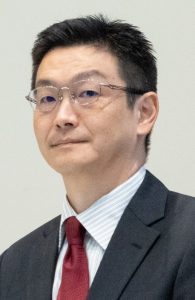
Keiji Tabuchi
Chair, School of Medicine